
lantramedia.com

Uncategorized

How to Improve Your Google Rankings

How to Improve Your Google Rankings is one of the most common questions business owners, marketers, and website managers ask. Ranking higher on Google can increase organic traffic, improve brand visibility, and generate more qualified leads without relying solely on paid advertising. However, achieving top rankings requires more than simply adding keywords to your website. Google’s algorithms now prioritize user experience, helpful content, technical performance, and trustworthiness. If you want your website to appear on the first page of search results, you need a well-planned SEO strategy. In this guide, you’ll learn practical techniques that can help improve your Google rankings and build long-term online success. Why How to Improve Your Google Rankings Matters Appearing on the first page of Google offers significant advantages for businesses. Higher rankings increase visibility, attract targeted visitors, and establish credibility within your industry. Learning How to Improve Your Google Rankings can help you: SEO is an investment that continues to deliver value over time when implemented correctly. How to Improve Your Google Rankings with High-Quality Content Content remains one of the strongest ranking factors. Google rewards websites that consistently publish useful, accurate, and original information. Focus on Search Intent Understand what users are trying to achieve when they search. Create content that answers their questions and solves their problems instead of simply targeting keywords. Publish Comprehensive Content Detailed articles that cover a topic thoroughly often perform better than short, generic posts. Include practical examples, actionable tips, and clear explanations. Update Existing Content Regularly refresh older articles with new information, statistics, and examples to keep them relevant and competitive. High-quality content encourages visitors to stay longer, increasing engagement signals that support better rankings. How to Improve Your Google Rankings with Keyword Optimization Keywords help search engines understand the topic of your content, but they should always be used naturally. Best practices include: Avoid keyword stuffing, as it can reduce readability and negatively affect search performance. How to Improve Your Google Rankings Through Technical SEO Technical SEO ensures search engines can crawl, index, and understand your website effectively. Improve Website Speed Fast-loading pages provide a better user experience and reduce bounce rates. Optimize for Mobile Devices A responsive website is essential because most users browse on smartphones. Use HTTPS Secure websites build trust with users and are favored by search engines. Fix Broken Links Regularly identify and repair broken links to improve user experience and site health. Technical optimization creates a strong foundation for long-term SEO success. How to Improve Your Google Rankings with Quality Backlinks Backlinks remain one of Google’s most important ranking signals. A backlink is a link from another website pointing to your content. Focus on earning backlinks by: Quality is far more important than quantity. Links from authoritative and relevant websites carry greater value than large numbers of low-quality links. How to Improve Your Google Rankings by Improving User Experience Google increasingly evaluates how users interact with websites. Improve user experience by: When visitors enjoy using your website, they are more likely to stay longer and explore additional pages. How to Improve Your Google Rankings with Local SEO Businesses serving specific cities or regions should invest in Local SEO. Key strategies include: Local SEO helps businesses appear in Google Maps and local search results, attracting nearby customers with high purchase intent. How to Improve Your Google Rankings by Monitoring Performance SEO requires continuous monitoring and improvement. Track important metrics such as: Use tools like Google Search Console and Google Analytics to identify opportunities for optimization and measure the effectiveness of your SEO efforts. How to Improve Your Google Rankings with Consistent SEO Practices SEO is not a one-time project. Search algorithms, customer behavior, and competitors are constantly evolving. Successful businesses consistently: Long-term consistency often outperforms short-term SEO tactics. Conclusion: How to Improve Your Google Rankings for Long-Term Success Understanding How to Improve Your Google Rankings is essential for businesses that want sustainable online growth. By creating high-quality content, optimizing keywords naturally, improving technical SEO, building authoritative backlinks, and delivering an outstanding user experience, you can increase your website’s visibility and attract more qualified visitors. SEO is a long-term strategy that rewards consistency, expertise, and continuous improvement. Rather than trying to manipulate search algorithms, focus on creating genuine value for your audience. As Google continues to prioritize helpful content and positive user experiences, businesses that invest in these principles will be better positioned to achieve higher rankings and lasting success.
Uncategorized

Influencer Marketing Trends for 2026

Influencer Marketing Trends for 2026 are reshaping how brands connect with audiences in an increasingly competitive digital world. Influencer marketing has evolved far beyond celebrity endorsements. Today, businesses of all sizes collaborate with creators to build trust, increase brand awareness, and drive measurable business results. As social media platforms continue to evolve and consumer expectations shift toward authenticity, brands must rethink how they approach influencer partnerships. Success in 2026 will depend on building genuine relationships, choosing the right creators, and measuring campaign performance with clear business goals. In this guide, we’ll explore the most important Influencer Marketing Trends for 2026 and explain how businesses can use them to create impactful influencer campaigns. Why Influencer Marketing Trends for 2026 Matter Consumers are becoming more selective about the content they engage with online. Traditional advertisements often struggle to capture attention, while trusted creators can introduce products and services in a more authentic and relatable way. Understanding the Influencer Marketing Trends for 2026 helps businesses: Brands that stay ahead of these trends can build stronger relationships with both creators and customers. Influencer Marketing Trends for 2026: Authenticity Will Drive Better Results One of the biggest shifts in influencer marketing is the growing demand for authentic content. Audiences can easily recognize overly promotional collaborations, making genuine recommendations more valuable than scripted advertisements. Prioritize Genuine Partnerships Brands should work with influencers who genuinely align with their products, services, and values. Authentic collaborations build long-term credibility and encourage stronger audience engagement. Encourage Creative Freedom Influencers understand their audience better than anyone. Allowing creators to present your brand in their own voice often results in more engaging and trustworthy content. Authenticity will continue to be one of the strongest drivers of campaign success. Influencer Marketing Trends for 2026: Micro and Nano Influencers Will Continue to Grow While celebrity influencers still attract attention, many businesses are shifting their focus toward micro and nano influencers. These creators often have: For small and medium-sized businesses, partnering with several niche influencers often delivers better results than investing in a single large creator. Influencer Marketing Trends for 2026: Short-Form Video Will Remain Essential Video content continues to dominate social media platforms, making it one of the most effective formats for influencer campaigns. Popular formats include: Short-form videos allow influencers to demonstrate products, share tutorials, provide reviews, and tell engaging brand stories that capture audience attention quickly. Influencer Marketing Trends for 2026: Long-Term Collaborations Over One-Time Campaigns Brands are increasingly moving away from one-time sponsored posts and investing in ongoing creator partnerships. Long-term collaborations help: When influencers repeatedly recommend a brand over time, audiences perceive the partnership as more authentic. Influencer Marketing Trends for 2026: Data-Driven Campaign Decisions Modern influencer marketing relies heavily on performance analytics rather than follower counts alone. Businesses should monitor: Engagement Rate Measures how actively audiences interact with influencer content. Reach and Impressions Shows how many users have viewed campaign content. Website Traffic Tracks visitors generated through influencer campaigns. Conversions Measures purchases, leads, or other desired actions resulting from collaborations. Return on Investment (ROI) Evaluates whether influencer partnerships generate profitable business outcomes. Using performance data allows businesses to optimize future campaigns and allocate budgets more effectively. Influencer Marketing Trends for 2026: AI Will Improve Influencer Selection Artificial Intelligence is helping brands identify influencers whose audiences closely match their target customers. AI tools can assist businesses by: AI enables brands to make more informed partnership decisions while improving campaign efficiency. Influencer Marketing Trends for 2026: Social Commerce Will Continue to Expand Social media platforms increasingly allow users to discover and purchase products without leaving the app. Influencers now play an important role in: By reducing friction in the buying process, influencer campaigns can directly contribute to higher sales and improved customer experiences. How Businesses Can Apply Influencer Marketing Trends for 2026 Businesses looking to maximize influencer marketing success should follow a structured strategy. Best practices include: A strategic approach ensures influencer marketing supports broader business and marketing goals. Conclusion: Influencer Marketing Trends for 2026 for Sustainable Growth The Influencer Marketing Trends for 2026 demonstrate that successful campaigns are built on authenticity, trust, and measurable performance. Businesses that focus on genuine creator partnerships, embrace short-form video, leverage AI-powered insights, and prioritize long-term relationships will achieve stronger engagement and better returns on investment. As influencer marketing continues to evolve, brands that adapt to changing consumer expectations and platform innovations will be better positioned to strengthen their online presence, reach new audiences, and drive sustainable business growth. Rather than treating influencer marketing as a standalone tactic, businesses should integrate it into their broader digital marketing strategy to maximize long-term success.

Uncategorized

Social Media Trends Every Brand Should Know

Social Media Trends Every Brand Should Know are constantly evolving as platforms introduce new features and consumer behavior changes. Social media is no longer just a channel for sharing updates—it has become one of the most powerful tools for brand awareness, customer engagement, lead generation, and sales. With billions of active users across platforms like Instagram, Facebook, LinkedIn, TikTok, and YouTube, businesses that stay ahead of emerging trends can build stronger relationships with their audience and achieve sustainable growth. Brands that fail to adapt often struggle to maintain visibility in increasingly competitive feeds. In this guide, we’ll explore the Social Media Trends Every Brand Should Know and explain how businesses can use these trends to strengthen their digital marketing strategy. Why Social Media Trends Every Brand Should Know Matter Consumer expectations on social media continue to evolve. Today’s users expect authentic content, quick responses, personalized experiences, and valuable information rather than constant promotional messages. Understanding the Social Media Trends Every Brand Should Know helps businesses: Brands that consistently adapt their strategy are more likely to achieve long-term success across social platforms. Social Media Trends Every Brand Should Know: Short-Form Video Continues to Dominate Short-form video remains one of the most effective content formats for reaching new audiences. Platforms such as Instagram Reels, YouTube Shorts, Facebook Reels, and TikTok continue to prioritize engaging video content in their algorithms. Create Educational Videos Share practical tips, tutorials, industry insights, and how-to content that solves common customer problems. Showcase Behind-the-Scenes Content Give audiences a look at your team, work process, company culture, or product development to build authenticity. Highlight Customer Success Stories Real customer experiences help establish credibility and encourage potential buyers to trust your brand. Consistent video content can improve reach, engagement, and brand recall. Social Media Trends Every Brand Should Know: AI-Powered Content Creation Artificial Intelligence is transforming the way brands manage social media. Businesses now use AI to: While AI improves productivity, successful brands continue to add human creativity, storytelling, and brand personality to maintain authenticity. Social Media Trends Every Brand Should Know: Community Building Over Follower Count Growing follower numbers is no longer the primary measure of success. Engagement and community are becoming far more valuable. Businesses should focus on: Responding to Comments Meaningful conversations increase trust and encourage repeat engagement. Encouraging User-Generated Content Customer reviews, testimonials, and tagged posts provide authentic social proof. Building Loyal Communities Private groups, exclusive content, and interactive discussions strengthen long-term customer relationships. A smaller, highly engaged audience often delivers better business results than a large but inactive following. Social Media Trends Every Brand Should Know: Personalization Drives Better Engagement Consumers expect content that feels relevant to their interests and needs. Brands can improve personalization by: Personalized experiences increase engagement while improving conversion rates. Social Media Trends Every Brand Should Know: Social Commerce Is Growing Social media platforms are increasingly becoming shopping destinations rather than simply marketing channels. Businesses can sell directly through: Reducing the number of steps between product discovery and purchase helps increase sales and improve customer convenience. Social Media Trends Every Brand Should Know: Influencer Partnerships Are Becoming More Authentic Influencer marketing continues to evolve toward long-term collaborations instead of one-time sponsored posts. Businesses benefit most by partnering with creators who: Micro and nano influencers often deliver stronger engagement rates than celebrities because of their closer relationships with followers. Social Media Trends Every Brand Should Know: Data-Driven Decision Making Modern social media success depends on measuring performance rather than guessing what works. Brands should regularly monitor: Analyzing these metrics helps businesses continuously improve their content strategy and advertising performance. How Businesses Can Apply Social Media Trends Every Brand Should Know Adopting the latest social media trends requires consistency and a clear strategy. Businesses should: Brands that consistently test, measure, and optimize their social media efforts will remain competitive in an ever-changing digital environment. Conclusion: Social Media Trends Every Brand Should Know for Long-Term Growth The Social Media Trends Every Brand Should Know highlight an important shift toward authenticity, personalization, and meaningful engagement. Successful brands are moving beyond vanity metrics and focusing instead on creating valuable content, building communities, leveraging AI responsibly, and making data-driven decisions. Social media is no longer just about being present—it is about creating experiences that educate, inspire, and connect with your audience. By embracing these trends and continuously adapting your strategy, your brand can increase visibility, strengthen customer relationships, and achieve sustainable business growth in 2026 and beyond.

Uncategorized

Top Website Design Trends for 2026

Top Website Design Trends for 2026 are redefining how businesses attract visitors, improve user experience, and convert traffic into customers. A website is no longer just an online brochure—it is often the first impression a potential customer has of a brand. In today’s competitive digital landscape, modern website design plays a crucial role in building trust, improving search engine rankings, and increasing conversions. As technology continues to evolve, customer expectations are also changing. Users now expect websites to load quickly, look professional, work flawlessly on every device, and provide a seamless browsing experience. Businesses that embrace the latest website design trends will be better positioned to stand out and achieve long-term success. In this guide, we’ll explore the Top Website Design Trends for 2026 and explain how businesses can use them to create high-performing websites. Why Top Website Design Trends for 2026 Matter Website design directly influences how visitors perceive your business. Research consistently shows that users form an opinion about a website within seconds, making design one of the most important factors in customer engagement. Following the Top Website Design Trends for 2026 helps businesses: A modern website not only looks attractive but also functions efficiently across all devices. Top Website Design Trends for 2026: AI-Powered User Experiences Artificial Intelligence is becoming a key part of website design. Businesses are using AI to create more personalized experiences for visitors. Examples include: AI Chatbots Smart chatbots provide instant customer support, answer common questions, and improve user satisfaction around the clock. Personalized Content AI can display tailored product recommendations, blog suggestions, or service pages based on user behavior and preferences. Predictive Search Modern search features suggest relevant content as users type, making websites easier to navigate. AI enhances user engagement while helping businesses deliver more relevant experiences. Top Website Design Trends for 2026: Minimalist and Clean Layouts Minimalism continues to dominate modern web design because it improves readability and keeps users focused on important content. Key elements include: A clutter-free interface makes it easier for visitors to find information and complete desired actions. Top Website Design Trends for 2026: Mobile-First Design With the majority of internet traffic coming from smartphones, mobile-first design is no longer optional. Businesses should ensure their websites: Google also prioritizes mobile-friendly websites when determining search rankings, making responsive design essential for SEO. Top Website Design Trends for 2026: Faster Website Performance Website speed significantly impacts both user experience and search engine optimization. Businesses can improve performance by: Optimizing Images Compressed, high-quality images reduce loading times without sacrificing visual appeal. Using Efficient Code Clean code and lightweight frameworks improve website responsiveness. Implementing Caching Caching allows frequently accessed resources to load faster for returning visitors. Fast websites keep users engaged and contribute to higher search rankings. Top Website Design Trends for 2026: Accessibility for Every User Inclusive website design is becoming increasingly important. Businesses should make websites accessible by: Accessible websites create better experiences for all users while supporting SEO and legal compliance. Top Website Design Trends for 2026: Interactive Design Elements Interactive experiences encourage users to spend more time exploring a website. Popular features include: These elements should enhance usability without slowing down the website. Top Website Design Trends for 2026: SEO-Friendly Website Structure A visually attractive website is only effective if users and search engines can easily navigate it. Businesses should focus on: An SEO-friendly website architecture improves crawling, indexing, and overall search visibility. Top Website Design Trends for 2026: Strong Visual Branding Consistent branding helps businesses become more memorable. Modern websites should maintain: Strong branding builds trust and creates a cohesive customer experience. How Businesses Can Implement Top Website Design Trends for 2026 Adopting modern design trends doesn’t require rebuilding an entire website overnight. Instead, businesses should continuously improve their websites based on user behavior and performance data. Practical steps include: Continuous optimization ensures your website remains competitive as technology evolves. Conclusion: Top Website Design Trends for 2026 for Long-Term Success The Top Website Design Trends for 2026 highlight the growing importance of user experience, performance, accessibility, and intelligent design. Modern websites must do more than look attractive—they must load quickly, provide valuable content, function seamlessly across devices, and guide visitors toward meaningful actions. Businesses that invest in responsive design, AI-powered experiences, SEO-friendly architecture, and fast website performance will be better positioned to attract qualified traffic, improve conversions, and build lasting customer relationships. By embracing these trends today, your website can remain competitive and continue delivering measurable business results well into the future.

Uncategorized

Performance Marketing Explained

Performance Marketing Explained is one of the most searched topics by businesses looking to maximize their marketing budget and achieve measurable results. Unlike traditional advertising, where businesses often pay upfront without guaranteed outcomes, performance marketing focuses on paying for specific actions such as clicks, leads, app installs, or sales. As digital advertising becomes increasingly competitive, businesses need marketing strategies that are data-driven, transparent, and capable of delivering a measurable return on investment (ROI). That’s where performance marketing stands out. It enables businesses to monitor every campaign, optimize spending in real time, and scale successful strategies with confidence. In this guide, we’ll explain what performance marketing is, how it works, its key channels, benefits, and best practices for achieving long-term success. Why Performance Marketing Explained Matters for Businesses Today’s businesses expect accountability from every marketing dollar they spend. Performance marketing provides exactly that by allowing advertisers to track campaign performance through clear metrics rather than assumptions. Understanding Performance Marketing Explained helps businesses: Whether you’re a startup or an established company, performance marketing provides valuable insights that help you make smarter marketing decisions. Performance Marketing Explained: How It Works Performance marketing is based on measurable actions rather than estimated exposure. Businesses launch campaigns across digital platforms and track customer interactions throughout the buying journey. Instead of paying simply for visibility, advertisers often pay for specific outcomes such as: This performance-based model allows marketers to evaluate which campaigns are generating results and adjust their strategy accordingly. Performance Marketing Explained: The Most Popular Channels Several digital platforms support performance marketing, each offering unique advantages depending on your business goals. Google Ads Google Ads helps businesses reach users actively searching for products or services. Search campaigns, Display Ads, Shopping Ads, and Performance Max campaigns are commonly used to drive qualified traffic and conversions. Meta Ads Facebook and Instagram Ads enable businesses to target audiences based on demographics, interests, behaviors, and online activity. Meta Ads are highly effective for generating leads, increasing brand awareness, and remarketing. LinkedIn Ads LinkedIn is particularly valuable for B2B businesses looking to target professionals, decision-makers, and specific industries. YouTube Advertising Video advertising on YouTube allows businesses to educate audiences, increase brand awareness, and drive website traffic through engaging visual content. Selecting the right platform depends on your target audience, industry, and campaign objectives. Performance Marketing Explained: Key Metrics Every Business Should Track Successful performance marketing relies on accurate data and continuous optimization. Some of the most important metrics include: Click-Through Rate (CTR) Measures how many users click your advertisement after seeing it. Cost Per Click (CPC) Indicates how much you pay each time someone clicks your ad. Cost Per Lead (CPL) Measures the average cost of generating a qualified lead. Conversion Rate Shows the percentage of visitors who complete a desired action, such as making a purchase or submitting a contact form. Return on Ad Spend (ROAS) Evaluates how much revenue is generated for every dollar spent on advertising. Monitoring these metrics helps businesses identify opportunities to improve campaign performance. Performance Marketing Explained: Benefits for Modern Businesses One of the biggest reasons businesses adopt performance marketing is its ability to deliver measurable results. Some major benefits include: Unlike traditional marketing, performance marketing provides clear evidence of what’s working and what needs improvement. Performance Marketing Explained: Best Practices for Better Results Running successful performance marketing campaigns requires more than launching advertisements. Businesses should focus on continuous optimization and testing. Define Clear Goals Set measurable objectives such as lead generation, online sales, website traffic, or app installs before launching campaigns. Know Your Audience Understand customer demographics, interests, online behavior, and purchasing habits to create highly relevant advertisements. Create High-Converting Landing Pages Even the best advertisements cannot perform well if the landing page provides a poor user experience. Fast loading speeds, compelling headlines, and strong calls-to-action improve conversion rates. Test and Optimize Experiment with different headlines, visuals, ad copy, audiences, and bidding strategies. Continuous A/B testing helps identify the highest-performing campaigns. Analyze Campaign Data Regularly review campaign metrics to understand which channels, audiences, and creatives generate the best return on investment. Performance Marketing Explained: Common Mistakes to Avoid Many businesses fail to achieve consistent results because they overlook essential optimization practices. Avoid these common mistakes: Avoiding these mistakes improves efficiency and increases long-term profitability. Performance Marketing Explained: The Future of Digital Advertising Performance marketing continues to evolve with artificial intelligence, automation, and advanced audience targeting. Emerging trends include: Businesses that embrace these innovations will be better equipped to achieve sustainable growth in an increasingly competitive digital landscape. Conclusion: Performance Marketing Explained for Long-Term Growth Understanding Performance Marketing Explained is essential for businesses that want measurable, scalable, and cost-effective marketing results. By focusing on data-driven decision-making, continuous optimization, and clear performance metrics, businesses can improve lead generation, increase conversions, and maximize return on investment. Whether you’re running Google Ads, Meta Ads, LinkedIn campaigns, or YouTube advertising, the key to success lies in monitoring performance, testing new strategies, and adapting based on real customer behavior. As digital marketing continues to evolve, performance marketing will remain one of the most effective approaches for driving sustainable business growth.

Uncategorized

SEO Trends Every Business Should Know

SEO Trends Every Business Should Know SEO Trends Every Business Should Know are shaping how businesses attract customers, improve search rankings, and grow their online presence in 2026. As Google continues to refine its algorithms and artificial intelligence changes the way people search, businesses can no longer rely on outdated SEO techniques. Success today depends on creating valuable content, delivering an excellent user experience, and understanding what your audience is searching for. Whether you’re a startup, a local business, or a growing enterprise, staying updated with the latest SEO trends can help you generate more organic traffic, qualified leads, and long-term business growth. Why SEO Trends Every Business Should Know Matter Search Engine Optimization is no longer just about ranking for keywords. Modern SEO focuses on understanding user intent, providing helpful content, and building trust with both users and search engines. Following the SEO Trends Every Business Should Know helps businesses: Businesses that continuously optimize their websites are more likely to achieve sustainable online success. SEO Trends Every Business Should Know: AI Is Reshaping Search Artificial Intelligence is transforming the digital marketing landscape. Google’s AI-powered search systems now evaluate content based on quality, relevance, and usefulness rather than keyword repetition alone. Create Helpful Content Businesses should focus on publishing original articles that answer real customer questions. Content that solves problems and provides actionable insights is more likely to rank well. Understand Search Intent Instead of targeting only keywords, understand why users are searching. Someone searching for “best SEO company” has a different intent than someone searching for “what is SEO.” Use AI Responsibly AI tools can speed up content creation and research, but human expertise is essential for adding accuracy, originality, and real value. SEO Trends Every Business Should Know: User Experience Is a Ranking Factor Google rewards websites that provide visitors with a fast, smooth, and secure browsing experience. Businesses should prioritize: Website Speed A slow-loading website increases bounce rates and negatively impacts rankings. Mobile-Friendly Design With most searches happening on smartphones, responsive websites are essential for both SEO and user satisfaction. Simple Navigation Visitors should easily find products, services, and important information without unnecessary clicks. Secure Browsing Using HTTPS protects user data and builds trust with both visitors and search engines. Improving user experience not only supports SEO but also increases engagement and conversions. SEO Trends Every Business Should Know: High-Quality Content Wins One of the biggest SEO Trends Every Business Should Know is that quality always outperforms quantity. Publishing fewer, well-researched articles is more effective than producing large amounts of low-value content. Effective SEO content should: Content that genuinely helps readers is more likely to earn backlinks, shares, and higher search rankings. SEO Trends Every Business Should Know: E-E-A-T Builds Trust Google places significant importance on E-E-A-T, which stands for Experience, Expertise, Authoritativeness, and Trustworthiness. Businesses can strengthen these signals by: Building trust not only improves SEO performance but also encourages visitors to become customers. SEO Trends Every Business Should Know: Local SEO Drives Qualified Leads Local SEO remains one of the most effective strategies for businesses targeting customers within a specific city or region. A strong local SEO strategy includes: Appearing in local search results helps businesses attract customers who are actively looking for nearby services. SEO Trends Every Business Should Know: Technical SEO Cannot Be Ignored Behind every high-ranking website is a solid technical SEO foundation. Businesses should regularly: Technical improvements make it easier for search engines to understand your website while enhancing the overall user experience. SEO Trends Every Business Should Know: Topic Clusters Improve Authority Search engines increasingly reward websites that demonstrate expertise across an entire subject rather than focusing on isolated keywords. For example, a digital marketing agency can create a pillar page about SEO and support it with articles covering: This strategy strengthens internal linking, improves topical authority, and helps search engines understand your expertise. How Businesses Can Apply SEO Trends Every Business Should Know Implementing these trends doesn’t require a complete website overhaul. Businesses should focus on consistent improvements over time. Start by: Small, consistent improvements often produce the strongest long-term SEO results. Conclusion: SEO Trends Every Business Should Know for Long-Term Success The SEO Trends Every Business Should Know highlight an important shift in digital marketing. Search engines now reward websites that prioritize helpful content, excellent user experience, technical performance, and genuine expertise. Businesses that embrace these trends will be better positioned to increase visibility, attract qualified traffic, and generate sustainable growth. SEO is not about finding shortcuts—it’s about creating value for your audience while continuously improving your website. By following these trends and adapting to changing search behaviors, businesses can build a stronger online presence and remain competitive in 2026 and beyond.

Uncategorized

Google Ads vs Meta Ads: Which Wins?

Google Ads vs Meta Ads: Which Wins? Google Ads vs Meta Ads: Which Wins? It’s one of the most common questions businesses ask when planning their digital marketing strategy. Both advertising platforms are industry leaders, but they serve different purposes and deliver results in different ways. Google Ads captures users who are actively searching for products or services, while Meta Ads (Facebook and Instagram) help businesses reach potential customers based on their interests, behaviors, and demographics. Choosing the right platform depends on your business goals, target audience, and budget. In this guide, we’ll compare Google Ads and Meta Ads across key areas to help you decide which platform offers the best return on investment (ROI) for your business. Google Ads vs Meta Ads: Which Wins for Customer Intent? One of the biggest differences between the two platforms is user intent. People using Google are actively searching for solutions. For example, someone searching for “best website design company” or “SEO services near me” already has a specific need. This means Google Ads allows businesses to target customers who are closer to making a purchase. On the other hand, Meta Ads appear while users are browsing Facebook or Instagram. They may not be looking for your product at that moment, but engaging visuals and compelling offers can create interest and generate demand. Google Ads Is Best For Meta Ads Is Best For Google Ads vs Meta Ads: Which Wins for Audience Targeting? Both platforms offer advanced targeting, but they approach it differently. Google Ads targets users based on: Meta Ads targets users based on: If your goal is to reach people before they start searching, Meta Ads provides exceptional audience targeting capabilities. Google Ads vs Meta Ads: Which Wins for Lead Generation? Lead generation depends largely on your industry. For businesses offering services such as: Google Ads generally generates higher-quality leads because users already have purchase intent. However, Meta Ads can generate a high volume of leads through instant lead forms and engaging creative campaigns, often at a lower cost per lead for awareness-focused campaigns. The best-performing businesses frequently combine both platforms to maximize results. Google Ads vs Meta Ads: Which Wins for Cost? Advertising costs vary based on industry competition. Google Ads often has: Meta Ads typically offers: While Meta Ads may appear less expensive initially, Google Ads often delivers stronger ROI for businesses targeting customers who are ready to buy. Google Ads vs Meta Ads: Which Wins for Ecommerce? For ecommerce businesses, both platforms play important roles. Google Ads excels with: Meta Ads performs well with: Many successful ecommerce brands use Meta Ads to build awareness and Google Ads to capture buyers with high purchase intent. Google Ads vs Meta Ads: Which Wins for Small Businesses? Small businesses often have limited marketing budgets, making platform selection even more important. Choose Google Ads if you want to: Choose Meta Ads if you want to: For many local businesses, starting with Google Ads provides faster lead generation, while Meta Ads supports long-term brand growth. Google Ads vs Meta Ads: Which Wins for Performance Tracking? Both platforms provide detailed campaign analytics. Google Ads measures: Meta Ads provides insights into: Tracking performance allows businesses to optimize campaigns and improve marketing ROI over time. Google Ads vs Meta Ads: Which Wins for Your Business? The answer depends on your objectives. Choose Google Ads if: Choose Meta Ads if: Many successful businesses don’t choose one over the other—they use both strategically. Google Ads captures existing demand, while Meta Ads creates new demand. Conclusion: Google Ads vs Meta Ads: Which Wins? When asking Google Ads vs Meta Ads: Which Wins?, there isn’t a single answer that fits every business. Google Ads performs exceptionally well for businesses targeting customers with strong purchase intent, making it ideal for lead generation and service-based companies. Meta Ads, meanwhile, excels at building brand awareness, engaging audiences, and introducing products to potential customers before they begin searching. The most effective digital marketing strategy is often an integrated one. By combining Google Ads and Meta Ads, businesses can attract customers at every stage of the buying journey—from initial discovery to final conversion. Rather than viewing the platforms as competitors, think of them as complementary tools that work together to maximize visibility, increase conversions, and deliver sustainable business growth.

Uncategorized

Digital Marketing Trends for 2026

Digital Marketing Trends for 2026: What Every Business Needs to Know In today’s fast-changing digital landscape, businesses can no longer rely on yesterday’s marketing strategies to achieve tomorrow’s growth. Consumer behavior, artificial intelligence, search engines, and social media platforms continue to evolve, making it essential for brands to stay ahead of the curve. Understanding the Digital Marketing Trends for 2026 isn’t just about keeping up with competitors—it’s about creating meaningful customer experiences, improving return on investment (ROI), and building a future-ready business. Whether you’re a startup, a growing business, or an established brand, these trends will shape how customers discover, evaluate, and purchase your products or services in 2026. For a better practical view, visit the site Lantra Media. Why Digital Marketing Trends for 2026 Matter The digital marketing landscape has become more competitive than ever. Search engines are prioritizing helpful, experience-driven content, while AI-powered tools are transforming the way businesses create campaigns, analyze data, and communicate with customers. Keeping up with the Digital Marketing Trends for 2026 allows businesses to: Businesses that adapt early often gain a significant competitive advantage over those that wait. Digital Marketing Trends for 2026: AI Will Lead Smarter Marketing Artificial Intelligence (AI) has moved beyond automation and become an essential part of modern marketing. In 2026, AI will help businesses make faster decisions, create personalized customer experiences, and optimize advertising campaigns more efficiently. Some of the most impactful AI applications include: While AI significantly improves efficiency, businesses should continue combining automation with human creativity to produce authentic and trustworthy content. Digital Marketing Trends for 2026: SEO Will Focus on User Experience Search Engine Optimization (SEO) continues to evolve beyond keywords alone. Google’s algorithms increasingly reward websites that provide valuable information, excellent user experience, and trustworthy content. Businesses should prioritize: High-Quality Content Publishing original, informative, and solution-oriented content remains one of the strongest ranking factors. Fast Website Performance Website loading speed directly impacts user satisfaction and search rankings. Mobile-First Optimization With most users browsing on smartphones, mobile-friendly websites are no longer optional. Search Intent Optimization Content should answer the exact questions users are searching for instead of simply targeting keywords. E-E-A-T Principles Google continues emphasizing Experience, Expertise, Authoritativeness, and Trustworthiness when evaluating content quality. These SEO practices will remain fundamental to succeeding with the Digital Marketing Trends for 2026. Digital Marketing Trends for 2026: Video Content Will Continue to Dominate Short-form videos remain one of the most engaging content formats across digital platforms. Businesses are increasingly investing in: Platforms like Instagram Reels, YouTube Shorts, and LinkedIn video are becoming powerful channels for increasing brand awareness and generating qualified leads. Video content not only improves engagement but also increases the amount of time users spend interacting with a brand. Digital Marketing Trends for 2026: Personalization Will Build Stronger Customer Relationships Consumers now expect personalized experiences rather than generic advertising. Businesses can deliver personalization by: Personalized marketing improves customer satisfaction while increasing conversion rates. Digital Marketing Trends for 2026: Performance Marketing Will Drive Better ROI Marketing budgets are becoming increasingly performance-focused. Instead of spending money on campaigns without measurable outcomes, businesses are prioritizing channels that provide transparent data and measurable returns. Popular performance marketing channels include: Businesses using performance marketing can monitor impressions, clicks, conversions, cost per acquisition (CPA), and return on ad spend (ROAS), enabling smarter investment decisions. Digital Marketing Trends for 2026: Influencer Marketing Will Become More Authentic Influencer marketing continues to evolve from celebrity endorsements toward authentic creator partnerships. Micro and nano influencers often deliver: Businesses should focus on partnering with creators whose audience closely matches their target customers instead of simply choosing influencers with the largest follower counts. Digital Marketing Trends for 2026: First-Party Data Will Become Essential With increasing privacy regulations and the gradual reduction of third-party cookies, businesses must develop stronger first-party data strategies. Examples include: Collecting data directly from customers enables businesses to create more personalized experiences while maintaining privacy compliance. Digital Marketing Trends for 2026: Brand Trust Will Influence Buying Decisions Customers increasingly prefer businesses that demonstrate transparency, expertise, and credibility. Brands can strengthen trust by: Trust has become one of the most valuable digital marketing assets, especially in competitive industries. How Businesses Can Prepare for Digital Marketing Trends for 2026 Businesses don’t need to adopt every trend immediately. Instead, they should build a strong digital foundation and implement changes strategically. A practical approach includes: Companies that continuously learn and adapt will be better positioned to succeed in an increasingly competitive digital marketplace. Conclusion The Digital Marketing Trends for 2026 highlight one clear message: businesses that embrace innovation while focusing on customer experience will achieve sustainable growth. Artificial intelligence, advanced SEO, performance marketing, personalization, video content, and first-party data are no longer optional—they are becoming essential components of successful digital marketing strategies. Rather than following every new trend, businesses should focus on implementing the strategies that align with their goals, audience, and long-term vision. By staying informed and adapting proactively, organizations can strengthen their online presence, attract qualified leads, and build lasting customer relationships in 2026 and beyond.

Uncategorized

How AI Is Transforming Digital Marketing

In todays world, Artificial Intelligence (AI) is revolutionizing digital marketing by enabling businesses to streamline processes, enhance decision-making, and create more effective marketing strategies. What once required hours of manual work can now be completed much faster with the help of AI-powered tools. From content creation and customer support to data analysis and advertising, AI is helping marketers work more efficiently while delivering better results. Learn More – How AI Is Transforming Digital Marketing from Lantra Media. One of the biggest benefits of AI in digital marketing is faster content creation. Businesses need a constant flow of blog posts, social media updates, email newsletters, and website content to stay competitive online. AI tools can assist with generating content ideas, creating outlines, suggesting keywords, and drafting content. This allows marketers to save time and focus on refining their message and building stronger marketing strategies. While AI can speed up the process, human creativity remains essential for creating authentic and engaging content that connects with audiences. AI is also helping businesses understand their customers more effectively. Every interaction a customer has with a website, advertisement, or social media page generates valuable data. AI can analyze this information quickly and identify patterns in customer behavior. These insights help businesses create more personalized marketing campaigns, recommend relevant products, and deliver content that matches customer interests. As a result, customers receive a better experience, and businesses can improve engagement, conversions, and customer loyalty. Another area where AI is making a significant impact is digital advertising. AI-powered advertising platforms can analyze audience behavior, optimize ad targeting, and adjust campaigns in real time. This helps businesses reach the right audience while reducing wasted advertising spend. Marketers can make smarter decisions based on data rather than guesswork, leading to improved return on investment (ROI). As digital marketing continues to evolve, AI is becoming an important tool for businesses of all sizes. It helps save time, improve efficiency, and deliver more personalized experiences for customers. However, the most successful marketing strategies combine the speed and insights of AI with the creativity, expertise, and human understanding that only people can provide. Businesses that embrace this balance will be better positioned to succeed in the rapidly changing digital landscape. How AI Is Transforming Digital Marketing and AI Is Shaping the Future of SEO and Digital Marketing Artificial Intelligence (AI) is transforming not only how businesses market their products and services but also how they improve their visibility online. Search Engine Optimization (SEO) remains one of the most effective digital marketing strategies, and AI is helping businesses achieve better results with greater efficiency. AI-powered tools can analyze search trends, identify valuable keywords, study competitor websites, and provide insights into what customers are actively searching for. This helps marketers create content that aligns with user intent and increases the chances of ranking higher on search engines. In addition to keyword research, AI can assist with content optimization by suggesting improvements to headlines, meta descriptions, website structure, and overall readability. These insights allow businesses to make data-driven decisions and enhance their online presence without spending countless hours on manual analysis. By combining AI technology with quality content and a strong SEO strategy, businesses can attract more targeted traffic and generate valuable leads. Looking ahead, the impact of AI on digital marketing is expected to grow even further. Businesses are increasingly using AI-powered chatbots, automated email marketing, predictive analytics, and personalized recommendations to improve customer experiences and increase engagement. These technologies help brands deliver more relevant content and communicate with customers at the right time. Despite its many advantages, AI works best when combined with human creativity and strategic thinking. While AI can automate tasks and analyze large amounts of data, it cannot fully replace the human understanding needed to build trust and meaningful relationships with customers. The future of digital marketing will belong to businesses that successfully blend AI-driven efficiency with authentic human communication. By embracing this balance, companies can improve their SEO performance, strengthen customer relationships, and achieve sustainable growth in an increasingly competitive online marketplace. AI in Social Media Marketing: A Powerful Tool, Not a Replacement Social media marketing has become an essential part of every successful digital marketing strategy. However, managing multiple social media platforms, creating engaging content, and tracking audience behavior can be challenging and time-consuming. This is where Artificial Intelligence (AI) is making a significant impact. AI-powered tools can help businesses identify the best times to post content, discover trending topics, analyze audience engagement, and suggest content ideas based on user interests. Instead of relying solely on trial and error, marketers can use AI insights to make smarter decisions and create content that is more likely to connect with their audience. This can lead to higher engagement rates, increased website traffic, stronger brand awareness, and more opportunities to generate leads. One of the biggest advantages of AI in social media marketing is its ability to process large amounts of data quickly. It can identify patterns in user behavior and help businesses understand what type of content their audience prefers. Whether it is short-form videos, educational posts, industry updates, or interactive content, AI helps marketers create more relevant and personalized experiences for users. Despite these benefits, AI is not replacing digital marketers. While AI can automate repetitive tasks and provide valuable recommendations, it cannot replicate human creativity, emotional understanding, and strategic thinking. Successful marketing campaigns are built on authentic storytelling, unique ideas, and meaningful connections with customers—qualities that still require a human touch. The future of digital marketing is not about humans competing with AI; it is about humans and AI working together. Businesses that use AI as a tool to support creativity and improve efficiency will be better positioned to succeed in an increasingly competitive online environment. As AI continues to evolve, marketers who embrace these technologies while maintaining authentic communication will have a clear advantage in building stronger brands and lasting customer relationships. What are your thoughts on AI in digital marketing? Do you think it is

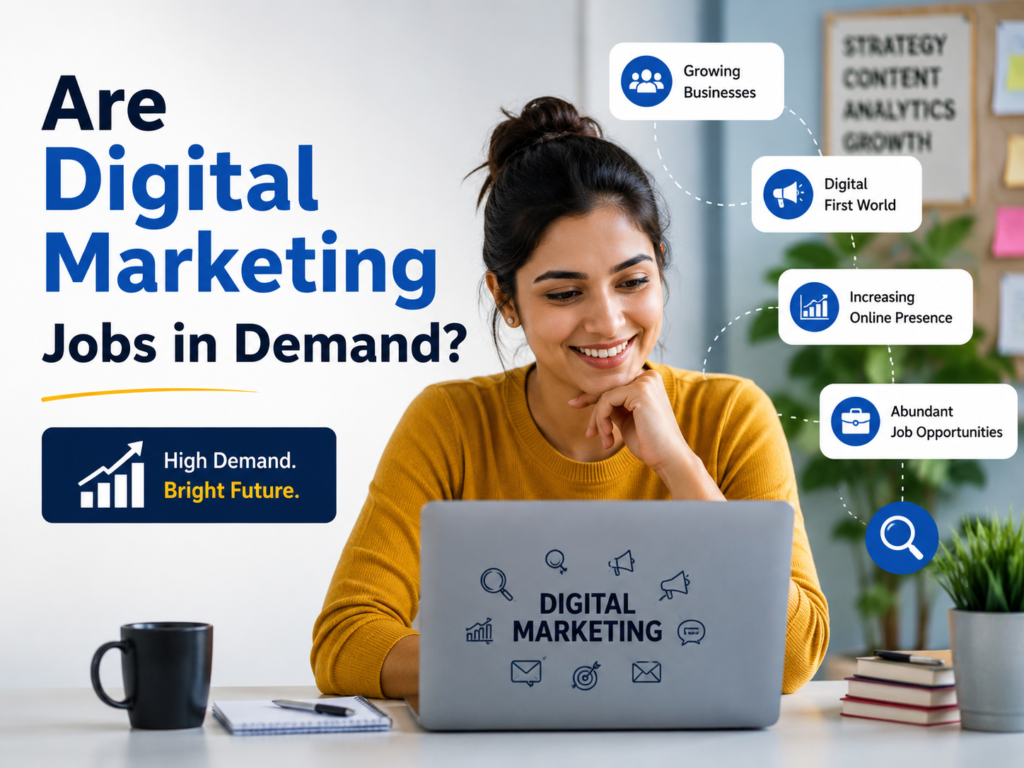
Are Digital Marketing Jobs in Demand?
Uncategorized

Are Digital Marketing Jobs in Demand?

Introduction These days, almost every business wants to grow online. People use Google, Instagram, YouTube, and Facebook every day. They search for products, watch videos, read reviews, and shop online. Because of this, companies need people who can help them grow on the internet. This is where digital marketers come in. They help businesses run ads, manage social media pages, write content, and bring more customers online. In the last few years, digital marketing jobs have grown very fast. Big companies, startups, and even small local businesses now hire digital marketers. Many businesses know that if they are not online, they can lose customers. So, are digital marketing jobs in demand? Yes, very much. As more businesses move online, the need for digital marketers keeps growing. What is Digital Marketing? Digital marketing means promoting a business on the internet. Companies use digital marketing to reach people online and sell their products or services. There are many parts of digital marketing. SEO helps websites appear on Google search results. Social media marketing helps brands grow on Instagram, Facebook, and LinkedIn. Paid ads help businesses reach more people quickly. Content marketing includes blogs, videos, and posts that attract customers. Today, businesses use digital marketing because most people spend a lot of time online. People search for things on Google, scroll social media, and shop from their phones. Companies want to reach these people where they already spend their time. That is why digital marketing has become important for almost every business today. Why Digital Marketing Jobs Are in High Demand Digital marketing jobs are growing very fast today. One big reason is that more businesses are going online. People now shop online, order food online, watch videos online, and even learn online. Because of this, companies want a strong online presence. Businesses need digital marketers to help them get more customers. They want people who can run ads, grow social media pages, write content, and improve website traffic. Another reason is social media growth. Millions of people use Instagram, YouTube, Facebook, and LinkedIn every day. Companies want to reach these users and promote their products to them. This creates more job opportunities for digital marketers. Even small businesses now hire digital marketers. Earlier, only big companies used online marketing. But today, local shops, gyms, restaurants, and startups also use digital marketing to grow their business. The best part is that digital marketing is needed in almost every industry. Fashion brands, sports companies, schools, hospitals, real estate businesses, and e-commerce stores all need digital marketers. That is why digital marketing jobs are in high demand and will likely keep growing in the future. Most In-Demand Digital Marketing Jobs Digital marketing has many different job roles. People can choose roles based on their skills and interests. SEO Specialist An SEO Specialist helps websites rank higher on Google. Their main job is to bring more visitors to a website through search engines. Social Media Manager A Social Media Manager handles platforms like Instagram, Facebook, and LinkedIn. They create posts, reply to followers, and help brands grow online. PPC or Google Ads Expert These professionals run paid ads on Google and social media platforms. Their goal is to bring sales, leads, or website traffic through advertising. Content Writer Content writers create blogs, articles, website content, and social media captions. Good content helps businesses attract customers. Email Marketing Specialist They send emails to customers about offers, updates, or new products. Email marketing helps businesses stay connected with customers. Digital Marketing Manager A Digital Marketing Manager handles the full marketing strategy of a company. They manage teams, campaigns, and online growth. These roles are popular because businesses need different experts for different parts of online marketing. Skills Needed for Digital Marketing To build a career in digital marketing, you need a mix of creative and technical skills. The good thing is that you do not always need a special degree to start. Many people learn digital marketing through online courses, internships, and practice. One important skill is communication. Digital marketers need to write good content, create attractive posts, and explain ideas clearly. Creativity also matters because businesses want fresh and engaging content. You should also learn basic SEO, social media marketing, Google Ads, and content creation. Knowing how to use tools like Google Analytics and Canva can also help. Another important skill is understanding trends. Social media and online marketing change very fast. A good digital marketer always keeps learning new things. Problem-solving and basic analytical skills are also useful. Businesses want marketers who can understand what is working and improve their campaigns. The more skills and experience you gain, the more job opportunities you can get in this field. Salary and Career Growth in Digital Marketing Digital marketing offers good salary growth and many career opportunities. Freshers can start with entry-level roles and slowly move to higher positions with experience. In the beginning, salaries may be average, but skilled professionals can earn very well after gaining experience. People who know SEO, paid ads, performance marketing, and content strategy are often in high demand. Another benefit of digital marketing is flexibility. Many companies offer remote jobs and freelance work. Some people also work with international clients from home. Digital marketing also gives people a chance to start their own business or agency. Many freelancers later build their own teams and work with multiple brands. Since businesses continue to grow online, digital marketers will likely have strong career opportunities in the coming years. Challenges in Digital Marketing Like every career, digital marketing also has some challenges. The industry changes very fast. Google and social media platforms often update their algorithms, so marketers need to keep learning new things. Competition is also high because many people want to enter this field. To grow faster, you need good skills and practical experience. Sometimes, digital marketers also face pressure to bring results, such as more sales, leads, or website traffic. Businesses expect campaigns to perform well. But people who stay updated

Scroll to Top
Call Now Button