
Digital Marketing Trends for 2026: What Every Business Needs to Know
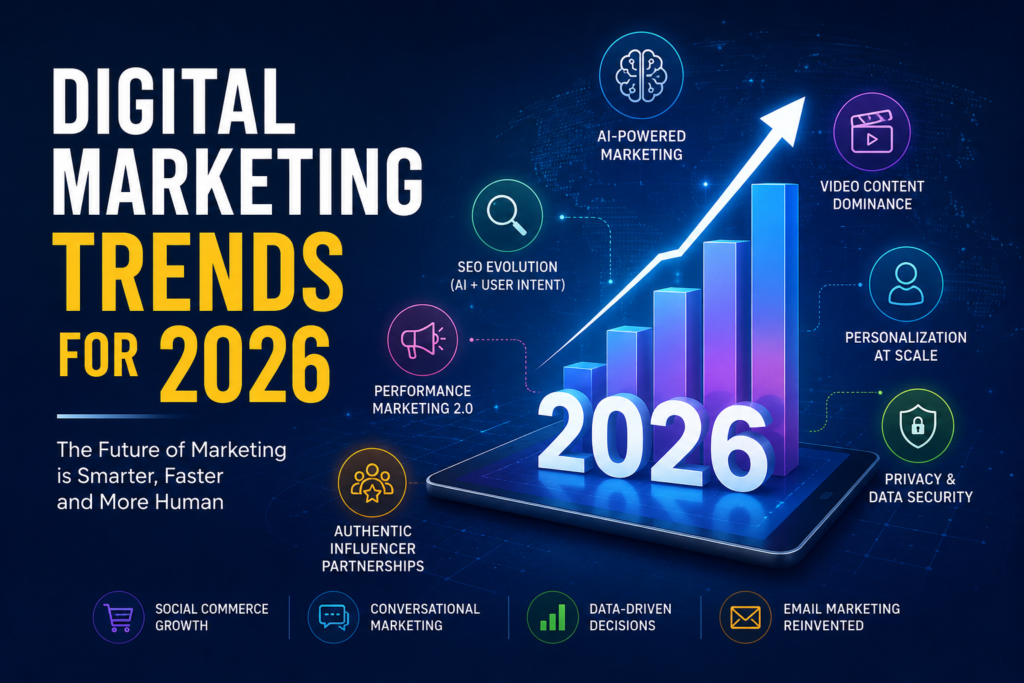
In today’s fast-changing digital landscape, businesses can no longer rely on yesterday’s marketing strategies to achieve tomorrow’s growth. Consumer behavior, artificial intelligence, search engines, and social media platforms continue to evolve, making it essential for brands to stay ahead of the curve. Understanding the Digital Marketing Trends for 2026 isn’t just about keeping up with competitors—it’s about creating meaningful customer experiences, improving return on investment (ROI), and building a future-ready business.
Whether you’re a startup, a growing business, or an established brand, these trends will shape how customers discover, evaluate, and purchase your products or services in 2026. For a better practical view, visit the site Lantra Media.
Why Digital Marketing Trends for 2026 Matter
The digital marketing landscape has become more competitive than ever. Search engines are prioritizing helpful, experience-driven content, while AI-powered tools are transforming the way businesses create campaigns, analyze data, and communicate with customers.
Keeping up with the Digital Marketing Trends for 2026 allows businesses to:
- Reach the right audience more effectively.
- Improve website visibility on search engines.
- Generate higher-quality leads.
- Increase customer engagement and trust.
- Stay ahead of changing technology and consumer expectations.
Businesses that adapt early often gain a significant competitive advantage over those that wait.
Digital Marketing Trends for 2026: AI Will Lead Smarter Marketing
Artificial Intelligence (AI) has moved beyond automation and become an essential part of modern marketing. In 2026, AI will help businesses make faster decisions, create personalized customer experiences, and optimize advertising campaigns more efficiently.
Some of the most impactful AI applications include:
- AI-powered content creation for blogs, emails, and advertisements.
- Predictive analytics for customer behavior.
- AI chatbots providing 24/7 customer support.
- Automated campaign optimization for Google Ads and Meta Ads.
- Personalized product and content recommendations.
While AI significantly improves efficiency, businesses should continue combining automation with human creativity to produce authentic and trustworthy content.
Digital Marketing Trends for 2026: SEO Will Focus on User Experience
Search Engine Optimization (SEO) continues to evolve beyond keywords alone. Google’s algorithms increasingly reward websites that provide valuable information, excellent user experience, and trustworthy content.
Businesses should prioritize:
High-Quality Content
Publishing original, informative, and solution-oriented content remains one of the strongest ranking factors.
Fast Website Performance
Website loading speed directly impacts user satisfaction and search rankings.
Mobile-First Optimization
With most users browsing on smartphones, mobile-friendly websites are no longer optional.
Search Intent Optimization
Content should answer the exact questions users are searching for instead of simply targeting keywords.
E-E-A-T Principles
Google continues emphasizing Experience, Expertise, Authoritativeness, and Trustworthiness when evaluating content quality.
These SEO practices will remain fundamental to succeeding with the Digital Marketing Trends for 2026.
Digital Marketing Trends for 2026: Video Content Will Continue to Dominate
Short-form videos remain one of the most engaging content formats across digital platforms.
Businesses are increasingly investing in:
- Educational videos.
- Product demonstrations.
- Behind-the-scenes content.
- Customer testimonials.
- Industry tips and tutorials.
Platforms like Instagram Reels, YouTube Shorts, and LinkedIn video are becoming powerful channels for increasing brand awareness and generating qualified leads.
Video content not only improves engagement but also increases the amount of time users spend interacting with a brand.
Digital Marketing Trends for 2026: Personalization Will Build Stronger Customer Relationships
Consumers now expect personalized experiences rather than generic advertising.
Businesses can deliver personalization by:
- Sending targeted email campaigns.
- Displaying customized website content.
- Recommending products based on browsing behavior.
- Creating audience-specific advertising campaigns.
- Segmenting customers based on interests and purchase history.
Personalized marketing improves customer satisfaction while increasing conversion rates.
Digital Marketing Trends for 2026: Performance Marketing Will Drive Better ROI
Marketing budgets are becoming increasingly performance-focused.
Instead of spending money on campaigns without measurable outcomes, businesses are prioritizing channels that provide transparent data and measurable returns.
Popular performance marketing channels include:
- Google Ads
- Meta Ads
- LinkedIn Ads
- YouTube Advertising
- Remarketing Campaigns
Businesses using performance marketing can monitor impressions, clicks, conversions, cost per acquisition (CPA), and return on ad spend (ROAS), enabling smarter investment decisions.
Digital Marketing Trends for 2026: Influencer Marketing Will Become More Authentic
Influencer marketing continues to evolve from celebrity endorsements toward authentic creator partnerships.
Micro and nano influencers often deliver:
- Higher engagement rates.
- Better audience trust.
- More affordable collaborations.
- Stronger community relationships.
Businesses should focus on partnering with creators whose audience closely matches their target customers instead of simply choosing influencers with the largest follower counts.
Digital Marketing Trends for 2026: First-Party Data Will Become Essential
With increasing privacy regulations and the gradual reduction of third-party cookies, businesses must develop stronger first-party data strategies.
Examples include:
- Email newsletter subscriptions.
- Customer loyalty programs.
- Website contact forms.
- CRM systems.
- Customer surveys.
Collecting data directly from customers enables businesses to create more personalized experiences while maintaining privacy compliance.
Digital Marketing Trends for 2026: Brand Trust Will Influence Buying Decisions
Customers increasingly prefer businesses that demonstrate transparency, expertise, and credibility.
Brands can strengthen trust by:
- Publishing educational blog content.
- Sharing customer reviews and testimonials.
- Displaying case studies and success stories.
- Maintaining consistent branding.
- Providing excellent customer support.
Trust has become one of the most valuable digital marketing assets, especially in competitive industries.
How Businesses Can Prepare for Digital Marketing Trends for 2026
Businesses don’t need to adopt every trend immediately. Instead, they should build a strong digital foundation and implement changes strategically.
A practical approach includes:
- Regularly updating website content.
- Investing in technical SEO.
- Leveraging AI to improve productivity.
- Creating consistent video content.
- Tracking marketing performance using analytics.
- Building an email database.
- Improving website speed and user experience.
- Testing campaigns and optimizing based on real data.
Companies that continuously learn and adapt will be better positioned to succeed in an increasingly competitive digital marketplace.
Conclusion
The Digital Marketing Trends for 2026 highlight one clear message: businesses that embrace innovation while focusing on customer experience will achieve sustainable growth. Artificial intelligence, advanced SEO, performance marketing, personalization, video content, and first-party data are no longer optional—they are becoming essential components of successful digital marketing strategies.
Rather than following every new trend, businesses should focus on implementing the strategies that align with their goals, audience, and long-term vision. By staying informed and adapting proactively, organizations can strengthen their online presence, attract qualified leads, and build lasting customer relationships in 2026 and beyond.